Jamaican Food Favorites That Define the Island
@dominickmkut656
Jamaica is often introduced through its beaches, music, and language, but the country makes one of its strongest impressions at the table. Jamaican food carries memory, geography, survival, and celebration in equal measure. It is bold without being careless, deeply seasoned without hiding the ingredient itself, and shaped by a long history of African, Indigenous, European, Indian, and Chinese influence. A single plate can tell you as much about the island as a museum exhibit or a history book.
What outsiders sometimes miss is that the best Jamaican dishes are not simply spicy or rich. They are balanced. Heat is checked by sweetness, smoke by acidity, starch by gravy, and intensity by fresh herbs. A roadside jerk pan, a market stall selling soup, or a family lunch on Sunday can show this better than any restaurant menu built for tourists. The island’s favorites have lasted because they satisfy on a practical level first. They feed workers, stretch ingredients, mark holidays, and turn modest staples into meals people crave for years after they leave.
To understand Jamaican food, it helps to think beyond recipes. The island’s cuisine is tied to local agriculture, to the rhythm of weekend cooking, and to methods that developed when people had to make the most of what was available. Fire mattered. Preservation mattered. So did flavor, because food was never treated as an afterthought. Even everyday meals are expected to have character.
Why Jamaican food stays with people
There are cuisines you admire and cuisines you remember in your body. Jamaican food tends to fall into the second category. The scent of pimento wood smoke from jerk, the buttery flake of a hot patty, the soft saltiness of ackee with onion and thyme, the richness of curry soaked into rice, these are sensory memories, not abstract impressions.
Part of that staying power comes from how Jamaican cooks layer flavor. Scotch bonnet peppers bring not only heat but fruitiness. Allspice, known locally as pimento, contributes warmth that can feel almost sweet. Thyme appears again and again, grounding dishes that might otherwise tip too far into sharpness or fat. Escallion, ginger, garlic, onion, and black pepper form a base many households could assemble almost by instinct. Seasoning is not treated as a final garnish. It is built in early and expected to carry all the way through.
Texture matters too. Plenty of beloved Jamaican dishes pair something soft with something crisp, or something saucy with a starch sturdy enough to absorb it. Festivals with jerk chicken. Fried dumpling with ackee and saltfish. Rice and peas with curry gravy. Hard dough bread with cheese, or with a slice of bun and a thick spread of butter at Easter. These combinations are not accidental. They evolved because people know what feels complete on the plate.
Jerk, the dish that became an emblem
No discussion of Jamaican food can start anywhere else. Jerk is the island’s best known culinary export, but it is often simplified abroad into a generic spicy marinade. Proper jerk is a method, a flavor profile, and in its best form, a cooking tradition tied to smoke and patience.
The roots of jerk are usually traced to the Maroons, descendants of enslaved Africans who escaped into Jamaica’s interior and preserved cooking methods that relied on seasoning and slow smoking meat over green pimento wood. That detail matters because authentic jerk is not just chile heat. It is aromatic, earthy, and smoky, with layers coming from allspice, thyme, scallion, garlic, ginger, and Scotch bonnet. Cinnamon, nutmeg, or clove sometimes appear in small amounts, depending on the cook. There is no single universal formula, which is part of the point. Every serious jerk cook has judgment calls built into the process.
Jerk chicken is the form most visitors encounter first, and when done right it has blackened edges, juicy meat, and a deep red-brown color under the char. The best pieces are often cut small enough to maximize surface area, so every bite picks up smoke and seasoning. Jerk pork, in my view, can be even more expressive. The fat carries smoke beautifully, and the meat takes well to longer cooking. A good jerk pork shoulder or rib cut should be sticky at the edges, tender inside, and sharp with pepper without becoming punishing.
There is also the setting. Jerk is rarely just a flavor. It is an atmosphere. You smell it before you see it. A roadside setup with split oil drums or traditional jerk pans, a cook moving pieces around the heat, newspapers or foil wrapping your order, maybe a side of festival or roasted breadfruit if you are lucky, that context changes how the food lands. In restaurants overseas, jerk sometimes arrives neat and plated, but on the island it often feels more immediate and alive.
Ackee and saltfish, the national dish with unusual elegance
Ackee and saltfish confuses first-time visitors on paper. Salt cod, imported through old trade routes, gets cooked with ackee, a fruit whose pale yellow flesh looks almost like scrambled eggs when prepared. Yet the dish makes perfect sense once you taste it. It is one of the clearest examples of Jamaica turning inherited ingredients into something distinct and unmistakably local.
Ackee is delicate. Cooked properly, it is creamy but not mushy, soft but still structured. Saltfish brings salinity and chew. Onion, tomato, thyme, black pepper, scallion, and Scotch bonnet round out the pan, though many cooks use the pepper for fragrance more than full heat. The dish can be rich, but it should never feel heavy. Its strength is restraint. If the ackee is over-stirred, it breaks down too much. If the saltfish dominates, the dish loses its balance.
At breakfast, ackee and saltfish is often paired with boiled green banana, fried dumpling, roasted breadfruit, or boiled yam. That combination captures something important about Jamaican eating habits. Meals are built to sustain, not merely to sample. The starches are there for a reason. They make the plate satisfying and temper the salty richness of the fish.
There is also an emotional dimension to this dish. For many Jamaicans at home and abroad, ackee and saltfish is deeply tied to family kitchens and weekend mornings. It is not only symbolic because it is called the national dish. It is symbolic because it carries the cadence of domestic life.
Patties, the snack that became a daily ritual
The Jamaican patty is one of the most successful hand foods in the Caribbean. Portable, inexpensive, and intensely satisfying, it manages to fit into almost any part of the day. School lunch, bus station snack, beach food, late afternoon pick-me-up, it works in all of them.
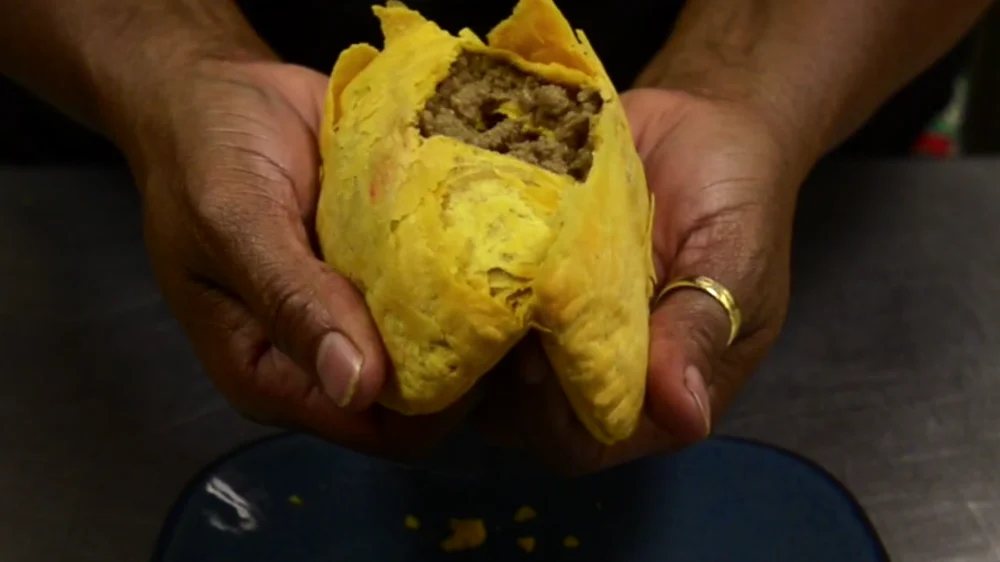
Its pastry matters as much as its filling. A proper patty shell should be flaky but sturdy enough to hold together. The color often comes from turmeric or egg wash, giving it that recognizable golden surface. Bite into a fresh one and the crust should shatter slightly without turning dry or brittle. Inside, the filling can range from classic seasoned beef to chicken, vegetable, soy, lobster, shrimp, or ackee-based variations in specialty shops. The standard beef patty remains the benchmark because it shows whether the balance is right. The meat should be savory, moist, and seasoned assertively, often with thyme, black pepper, onion, and a touch of Scotch bonnet.
One of the smartest and simplest ways to eat a patty is inside coco bread, the soft, slightly sweet bread that turns a snack into a more substantial meal. It is not fussy, but it is deeply effective. The contrast between flaky pastry and pillowy bread sounds excessive until you try it. Then it feels inevitable.
What makes the patty important in Jamaican food is not just popularity. It reflects adaptation. You can see echoes of the Cornish pasty in the form, but the end result is fully Jamaican in flavor and identity. That story repeats across the cuisine. Borrowed structures become local classics because they are seasoned by Jamaican taste and daily life.
Curry goat, where patience pays off
Few dishes reveal a cook’s discipline better than curry goat. The flavor must penetrate fully, the meat must soften without losing all structure, and the gravy must be rich enough to coat rice without turning greasy. When any of those elements are off, the dish feels ordinary. When they are right, it is unforgettable.
Jamaican curry differs from many Indian curries, though its presence on the island reflects Indian indentured laborers who brought techniques and spice traditions in the nineteenth century. Jamaican curry powder usually leans heavily on turmeric and has a warm, rounded flavor profile. In curry goat, it is often “burned” lightly in oil at the start to deepen aroma before liquid is added. Goat meat, tougher than lamb and more distinctive in flavor, rewards long cooking. It needs time for connective tissue to relax and for the spices to sink in.
The best versions have a gravy with depth, not just color. Potatoes often go in later, both to absorb flavor and to thicken https://collinirax578.timeforchangecounselling.com/jamaican-food-meals-perfect-for-lunch-or-dinner the sauce a little as they soften. Scotch bonnet may be added whole for aroma, or chopped for more direct heat. Either approach can work. What matters is proportion. Too much heat and the goat loses its earthiness. Too little seasoning and the dish tastes flat.
Curry goat appears at celebrations for good reason. It feeds groups well, improves as it rests, and carries a sense of occasion. Weddings, funerals, birthdays, and holiday gatherings across Jamaica often feature it because it satisfies a crowd while still feeling generous.
Rice and peas, the side dish that is never just a side
Outside Jamaica, people sometimes misunderstand rice and peas as an afterthought. On the island, it is one of the foundations of the meal. Usually made with kidney beans or gungo peas depending on the season and the household, coconut milk, thyme, scallion, garlic, and Scotch bonnet turn plain rice into something fragrant enough to anchor an entire plate.
Sunday rice and peas has almost ceremonial status in many homes. Pair it with chicken, beef, fish, curry goat, or stew peas and it does more than absorb sauce. It contributes its own flavor. Each grain should stay separate but tender. Mushy rice is a disappointment. Underseasoned rice is worse.
The coconut element is important. It gives subtle sweetness and body, which is one reason rice and peas works so well beside heavily seasoned meat. It softens edges and makes the whole plate feel unified. You can taste the logic instantly when jerk, fried chicken, or curry shares the dish.
This is where context matters again. In many Jamaican households, daily food is not plated as isolated stars with decorative sides. It is composed. Rice and peas, steamed vegetables, maybe plantain, maybe coleslaw or potato salad depending on the occasion, all contribute to the experience. Calling one part the star can miss how the meal is designed to work together.
Escovitch fish, sharp, bright, and coastal
If jerk expresses smoke and curry expresses depth, escovitch expresses contrast. Traditionally made with fried whole fish, often snapper, then topped with a hot vinegar-based dressing of carrot, onion, Scotch bonnet, and sometimes pimento berries, escovitch is one of Jamaica’s cleanest and most vivid dishes.
The fish itself needs to be fried well, crisp at the skin and cooked through without turning dry. That alone takes skill, especially with whole fish. But the escovitch dressing is what defines the dish. It should be tart enough to cut through oil, sweet enough to round out the vinegar, and hot enough to stay lively. The vegetables soften slightly in the liquid but should keep some crunch.
Escovitch is often served with bammy, the cassava flatbread of Taíno origin, and that pairing says a lot about Jamaica’s layered culinary history. Bammy, especially when soaked lightly in milk or water before frying, brings mildness and chew that fit the fish beautifully. The plate tastes coastal, practical, and old in the best way.
On beach outings and holiday weekends, fried fish with festivals or bammy shows up constantly, and for good reason. It is festive food that does not need elaborate presentation. The flavors do the work.
Brown stew chicken and oxtail, the language of the Sunday table
Two dishes define comfort in many Jamaican homes: brown stew chicken and oxtail. They are different in cost, timing, and richness, but they share a style of cooking built on browning, simmering, and allowing seasoning to settle deep into the meat.
Brown stew chicken begins with a key Jamaican technique, browning sugar or sauce to develop color and complexity. The chicken is seasoned, often left to marinate, then browned and simmered with onion, tomato, garlic, thyme, sweet pepper, and sometimes carrot. The resulting gravy should be glossy and savory, with enough depth to feel serious but enough freshness to remain everyday food. This is not flashy cooking. It is disciplined home cooking that rewards attention.
Oxtail, by contrast, leans luxurious. Once considered a cut that required patience to become desirable, it now commands a premium in many places. Jamaican-style oxtail is braised until the meat softens and clings to the bone, often with broad beans added near the end. The gravy should be dark, rich, and almost sticky. This is a dish that begs for rice and peas, because the sauce would be wasted on anything else.
These foods matter because they are domestic benchmarks. Ask people what they miss when they move away, and versions of these dishes come up repeatedly. They represent competence, generosity, and the specific comfort of a meal made by someone who knows your appetite.
Soup as substance, not starter
Jamaican soups are often treated elsewhere as appetizers, but on the island they can be complete meals. Saturday soup in particular is a tradition in many communities, with mannish water, red peas soup, chicken foot soup, fish tea, and pumpkin soup all carrying their own following.
Mannish water, made from goat parts and provisions, is famous as a restorative and celebration food. Red peas soup, thickened with kidney beans, coconut milk, dumplings, yam, and salted meat or pig’s tail, can border on a stew. Fish tea, despite the name, is not tea at all but a clear, savory fish broth, often sharpened with herbs and pepper. Good fish tea tastes bracing and clean, like the sea translated into comfort.
These soups reveal something central about Jamaican food culture. Economy and pleasure are not opposites. A pot built from bones, tough cuts, or humble root vegetables can still feel abundant. In many cases, it feels more abundant because every element has purpose.
The supporting cast that quietly defines the meal
Some of the most essential Jamaican foods are not stand-alone stars. Plantain, callaloo, breadfruit, festivals, fried dumplings, boiled green bananas, and ground provisions like yam and coco keep appearing because they complete the logic of the plate.
Breadfruit deserves special mention. Roasted over open flame until the skin blackens, then peeled and broken apart, it can be starchy, smoky, and almost creamy depending on ripeness. With ackee and saltfish, with fried fish, or even simply with butter, it shows why Caribbean starches deserve more respect than they usually receive in international food writing.
Callaloo, often sautéed with onion, garlic, tomato, thyme, and maybe a little Scotch bonnet, brings a vegetal counterpoint many heavier dishes need. Festivals, those slightly sweet fried dough sticks often served with jerk or fish, are another small masterstroke. Their sweetness cuts spice and salt while adding crunch outside and softness inside.
These are not background notes. They are part of the architecture of Jamaican food.
Sweet endings and everyday drinks
Dessert in Jamaica often reflects the island’s love of spice, fruit, and dense textures. Rum cake, sweet potato pudding, gizzada, toto, grater cake, and coconut drops all have loyal audiences. Sweet potato pudding, in particular, captures something very Jamaican in its combination of grated sweet potato, coconut milk, spices, and a top layer many call the “hell a top, hell a bottom” effect when baked correctly, darker and firmer above, softer below.
Then there are the drinks that frame the meal or stand on their own. Sorrel at Christmas, ginger beer with real force, peanut punch, carrot juice spiced and enriched, Irish moss, and fresh coconut water all play a role in the broader food landscape. Jamaican food is not just what sits on the plate. It is the ritual around it, the drink in hand, the timing of the meal, the company.
What defines the island on the plate
If you try to reduce Jamaican food to a single trait, you miss it. The cuisine is not just spicy, though it can be fiery. It is not just hearty, though it feeds with purpose. It is not just a fusion story, though its influences are broad and visible. What defines it is confidence. Jamaican cooks trust bold seasoning, long marination, smoke, acid, starch, and heat because they know how each piece should work with the others.
That confidence is why the island’s favorite dishes endure. Jerk tastes like place. Ackee and saltfish tastes like adaptation turned into identity. Patties taste like everyday ingenuity. Curry goat tastes like patience. Rice and peas tastes like home. Escovitch fish tastes like the coast. Brown stew chicken and oxtail taste like family tables that value depth over speed.
For travelers, Jamaican food often begins as discovery. For Jamaicans, it is usually recognition. The dishes people celebrate most are the ones that continue to feel true, whether eaten from a roadside pan, a takeout box, a wedding buffet, or a grandmother’s kitchen. That is what makes them favorites, and that is what allows them to define the island so completely.
Reggae Pot Jamaican Grill
2243 S Monaco St Pkwy #104
Denver, CO 80222
+1 720-410-2956
FAQ About jamaican food
What is the best Jamaican food to try in Denver?
The best choice depends on your tastes. Popular options include jerk chicken, curry goat, slow-cooked oxtail, and savory patties. Reggae Pot lists these dishes on its menu, with sides such as rice and peas and plantains. Ask the Denver team about current availability and spice levels.
Is Jamaican food very spicy in Denver?
Heat varies by dish and preparation. Jerk seasoning often includes scotch bonnet peppers alongside herbs and allspice, while other dishes may have gentler seasoning. Ask about the heat of the specific dish and any sauce before ordering.
What are some popular Jamaican snacks?
Jamaican patties are a popular snack made with flaky pastry and savory meat or vegetable fillings. Other options include fried dumplings and festival, a sweet fried dough often served with savory dishes. Availability varies, so check the current menu when ordering.